
- Stock
- Ethiopia - Megadu
Ethiopia - Megadu
Ethiopia - Megadu
Tasting notes: Blackberry, Plum, Peach
Region: Guji
Altitude: 2,000m
Process: Natural
Varietals: Mixed
Tasting notes: Blackberry, Plum, Peach
Region: Guji
Altitude: 2,000m
Process: Natural
Varietals: Mixed
Bette Buna literally translates to ‘House of Coffee’ and this company has been deeply rooted in the village ever since Grandfather Syoum and Grandmother Emame asked Dawit and Hester to take over their farm, but more importantly, their responsibility for building the community of Taferi Kela.
Since establishing 5 years ago in Sidama, Bette Buna has expanded their impact to Guji Megadu as well where they work with local community leaders to replicate the model in anotherregion. Bette Buna have a small model farm of their own in Guji, and work with local chiefs to improve processing on their lots as well. Megadu is part of the Shakisso Woreda of Guji and is one of Guji’s most remote communities. The region is very mountainous and densely forested. The soil is rich and the potential for coffee is spectacular, making it one of the most exceptional coffee growing regions in the world.
Building opportunities
Coffee production in Ethiopia accounts for about a third of the country's GDP but more than 90 percent of people working in coffee don’t make a livable income. Bette Buna has set out to change that in their community. They teach their community farmers to improve their soil, grow back agro-forest systems, and teach the importance of picking ripe cherries. Ripe cherries weigh more and produce better coffee, so the farmers get paid more by weight, and also receive a quality premium.
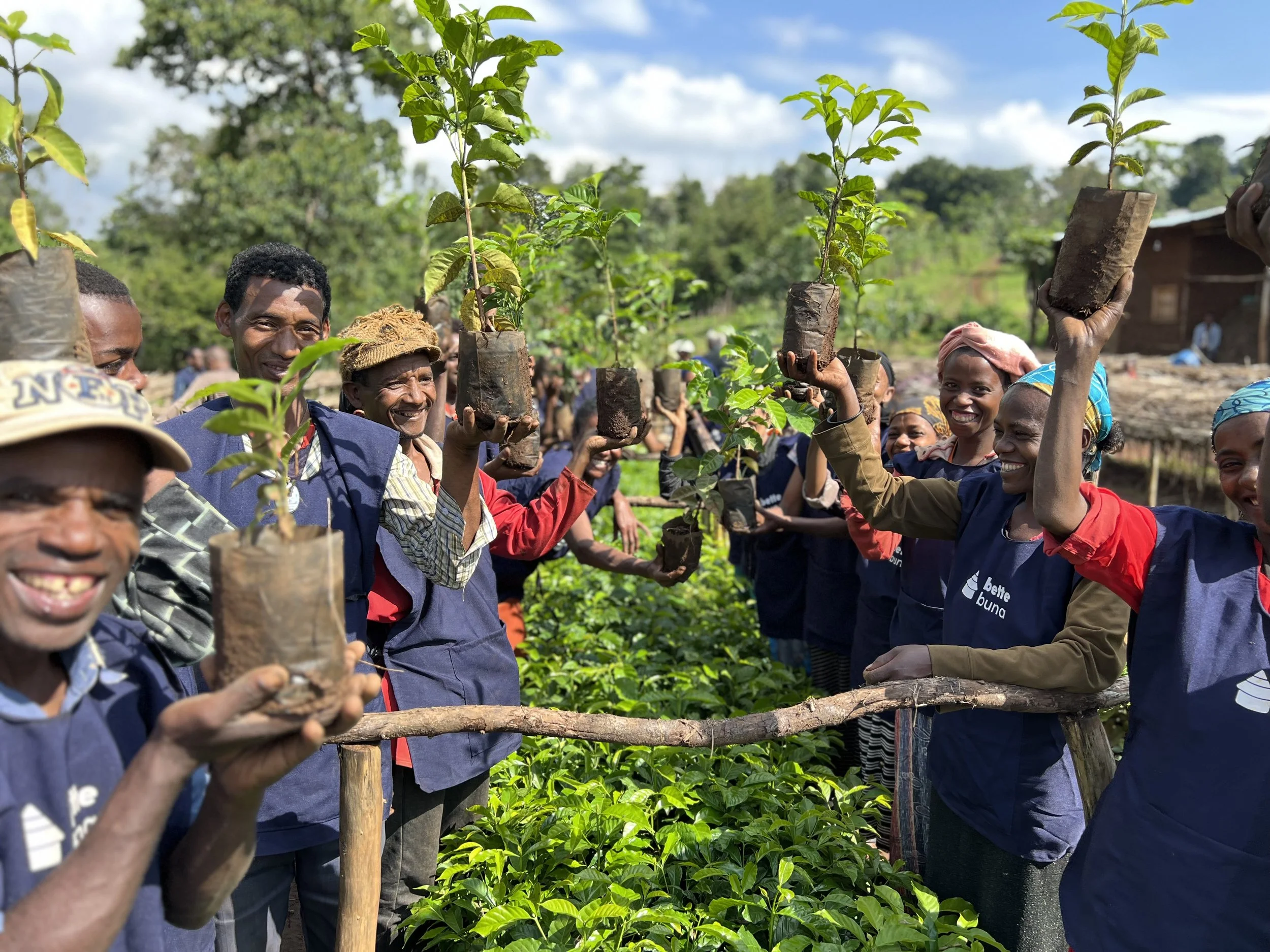
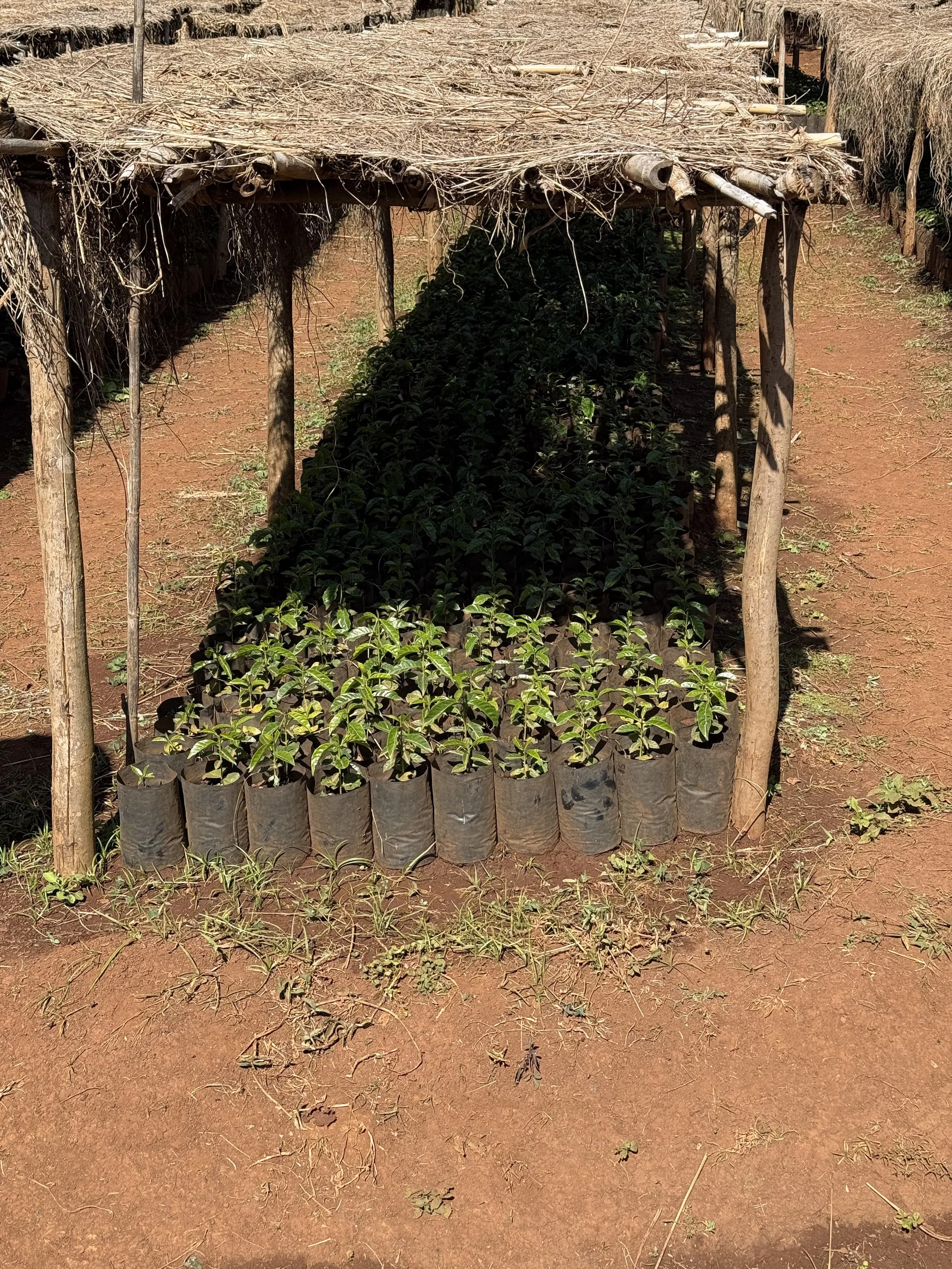
Perhaps most importantly, they distribute more than 350,000 healthy seedlings every year from their in-house nursery. These seedlings are climate-change adapted varietals, and on average the farmers who plant them make minimum $2 per year per seedling once the trees are grown.
This means an economic impact in the area of more than $650,000 a year in a region where the average household income is less than $50 per month for an average family size of 9 people.
Equal Opportunity Employment and Transparent Supply Chains.
Bette Buna is an equal opportunity employer, which is rare in a culture that doesn't typically provide meaningful work for differently abled or disabled people. Their nursery employs people with disabilities (particularly deaf people), families of people with disabilities, as well as other largely disenfranchised groups such as single mothers who struggle to find work, and especially work that accommodates childcare for working mothers in an agrarian society.
With Bette Buna, the traceability is exceptional. For every lot they specifically track and map the people involved at each stage of production, from the people who picked the cherries to those who processed and milled the coffee. This level of transparency is almost unheard of in Ethiopia. Not only do we know we’re getting the same coffees we tasted pre shipment, but we also know that the people who did the work are getting fair wages — everyone involved is adding value and being valued. This transparency work has the additional benefit of meaning Bette Buna is prepped for EUDR compliance.
This Lot
This lot is from Bette Buna’s own farm in Guji Megadu. In Guji, the ripe cherries are amazingly red and easy to pick. Despite this, there were a lot of challenges in Megadu this year because of a shortage of farm laborers. This lack of workers lost Bette Buna quite a bit of harvest, as they were forced to leave many of the ripe cherries unpicked.
The ‘kickstart’ process was developed by the processing team at Bette Buna as a way to concentrate the sugars and change their structures before the normal natural processing begins. After taking the cherries to the wet mill, the team gave them a “kick” by putting them in an anaerobic environment for a short amount of time before continuing processing. Not long enough for official fermentation to begin, but long enough that the structure of the sugar within the cherries changed. This produces lots with more sweetness and body on top of the standard Sidamo natural profile.
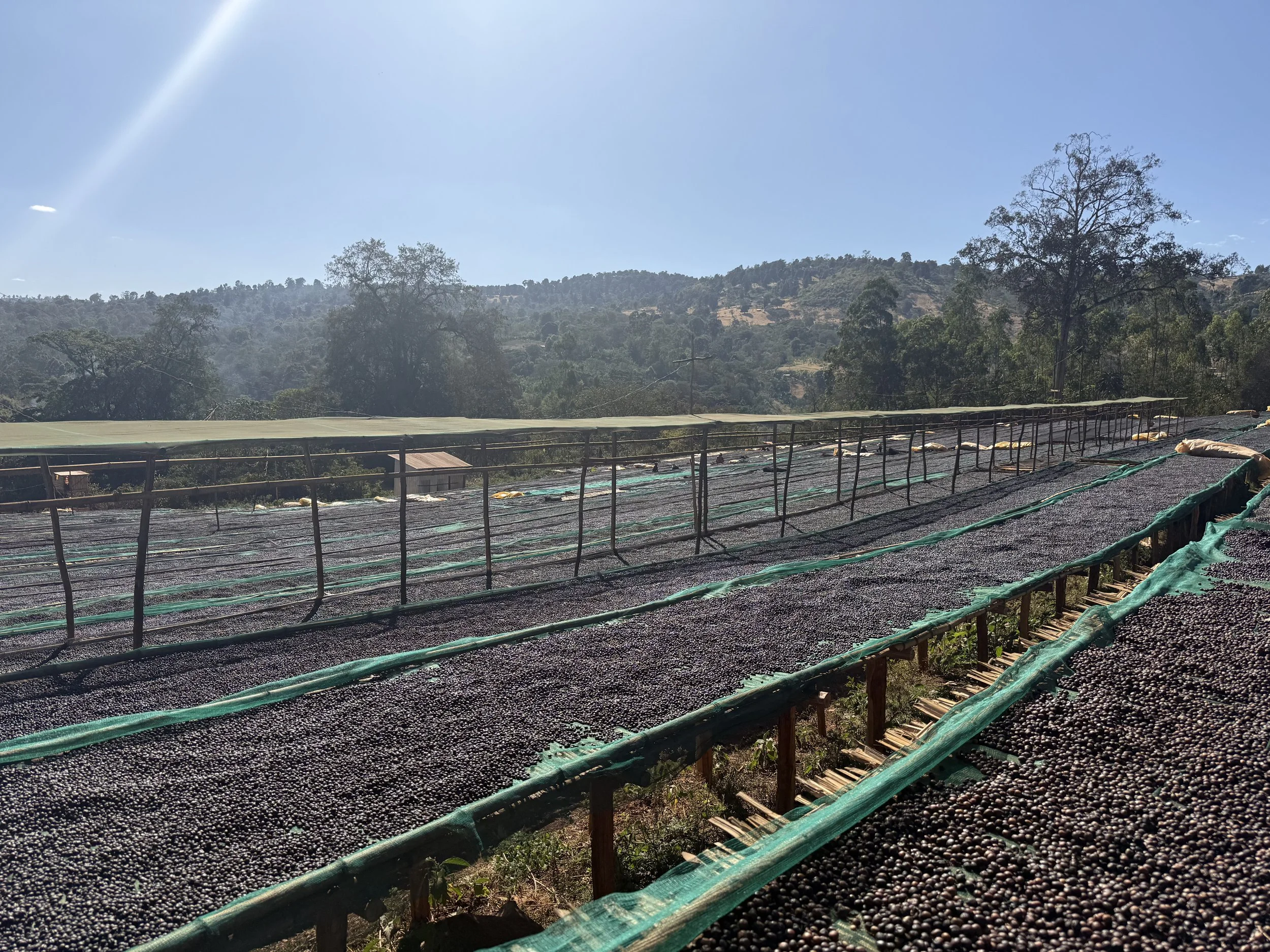
After this the coffee is dried normally on raised African style beds. It’s now a standard processing technique for the Bette Buna team, and we think the results speak for themselves. Once the correct moisture level was reached, the cherry was bagged, tagged and moved to store to rest for a minimum of 8 weeks to improve the complexity and intensity of each cup profile. After dry milling locally to remove the hull, the team applied another round of hand sorting to remove any primary defects. After that, the bags of green coffee were loaded on a truck to take a 3-5 day drive to the main BB dry mill in Gelan, located close to Addis Ababa.
Here the green beans underwent another round of cleaning, screening on size and density, and color sorting, and were bagged a final time, ready to be exported.